

Release time:2023-12-29 Browsed0 order
Project Location: South Korea
Application: Smart Exhibition Centers · Trade Shows · Convention Centers · Event Management · Smart Facility Operations
Technologies: BLE Beacons · Wireless Sensors · IoT Gateways · Indoor Positioning · GPS · LoRaWAN · Mobile Apps ·
Cloud Management Platforms
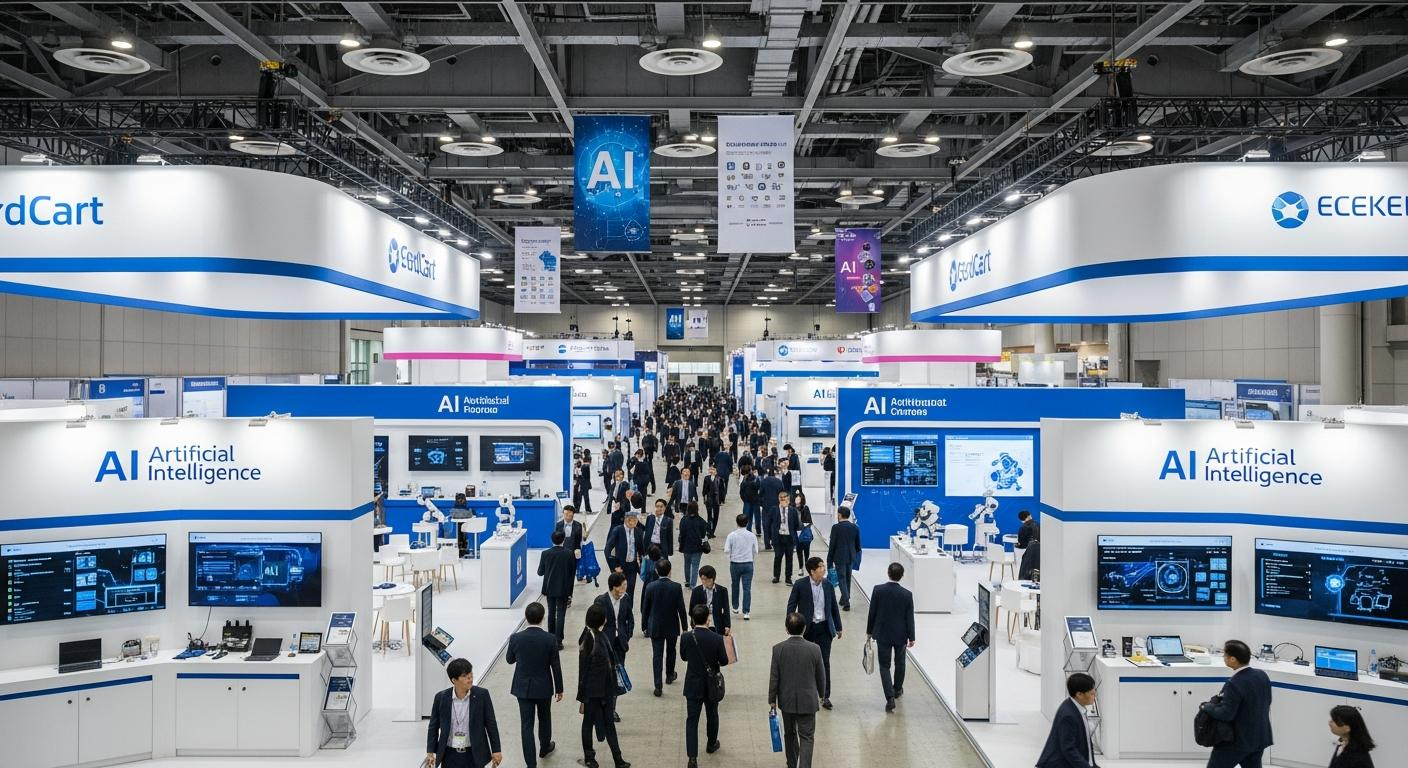
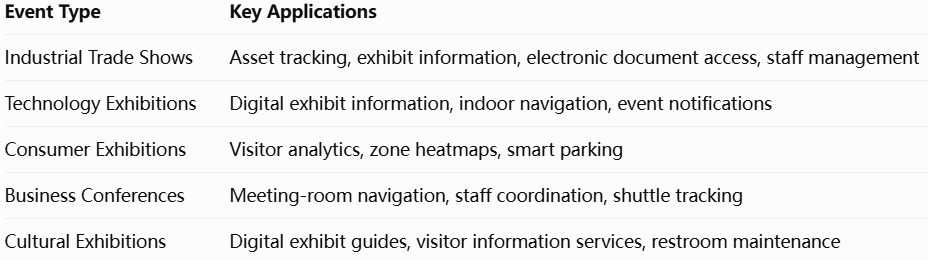
South Korea hosts a wide variety of exhibitions, including industrial equipment trade shows, technology expos,
consumer product exhibitions, cultural events, and international business conferences.
For a multifunctional exhibition venue in South Korea, each event brings different exhibitors, booth layouts, equipment requirements,
and visitor volumes. Yet these events often share the same venue infrastructure, operational teams, and facility resources.
The challenge is not simply managing a single exhibition. It is maintaining efficient operations while continuously adapting to
different event requirements.
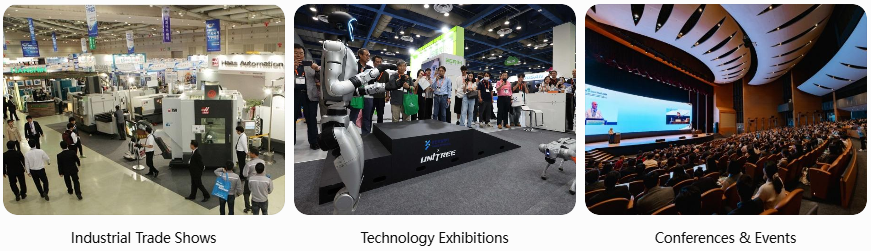
For example, an industrial exhibition requires coordination of equipment and technical staff. A consumer trade show may
prioritize visitor traffic and booth popularity, while a technology exhibition places greater emphasis on indoor navigation and
digital exhibit information.
Traditional approaches relying on manual inspections, printed materials, information desks, and separate management systems
can struggle to support all these requirements efficiently.
To address these challenges, a comprehensive smart exhibition solution combines BLE Beacons, wireless sensors, IoT gateways,
and digital management platforms to connect visitors, exhibits, equipment, staff, and venue facilities.
Project Objective: Improve venue operations, enhance visitor experiences, and establish reusable IoT infrastructure that can
support different exhibitions and events over time.
2. Key Challenges in Exhibition Venue Management
The South Korean exhibition project is structured around multiple wireless sensing technologies, with each application using
the most appropriate devices and communication methods.
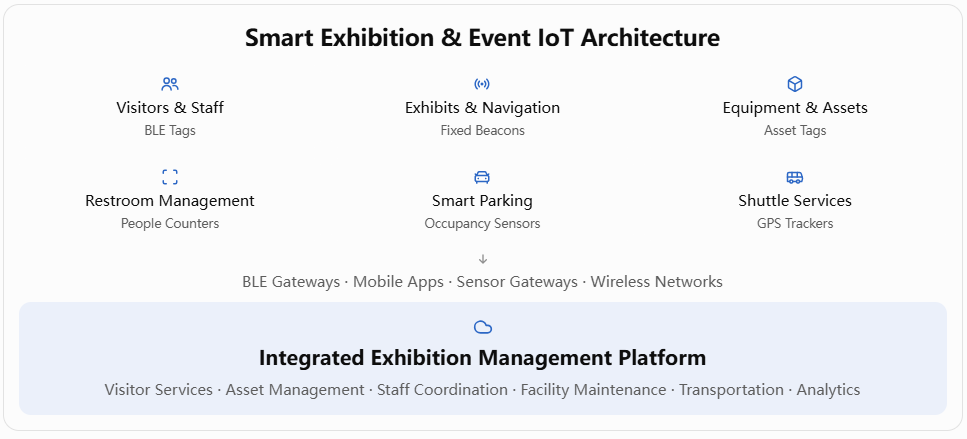
Mobile BLE tags can be detected by fixed gateways, while visitors' smartphones can scan fixed Beacons for navigation and
exhibit information. People-counting sensors, parking sensors, and GPS trackers transmit data through their respective
communication networks.
These data streams can be integrated into a common management platform, providing a broader view of venue operations.
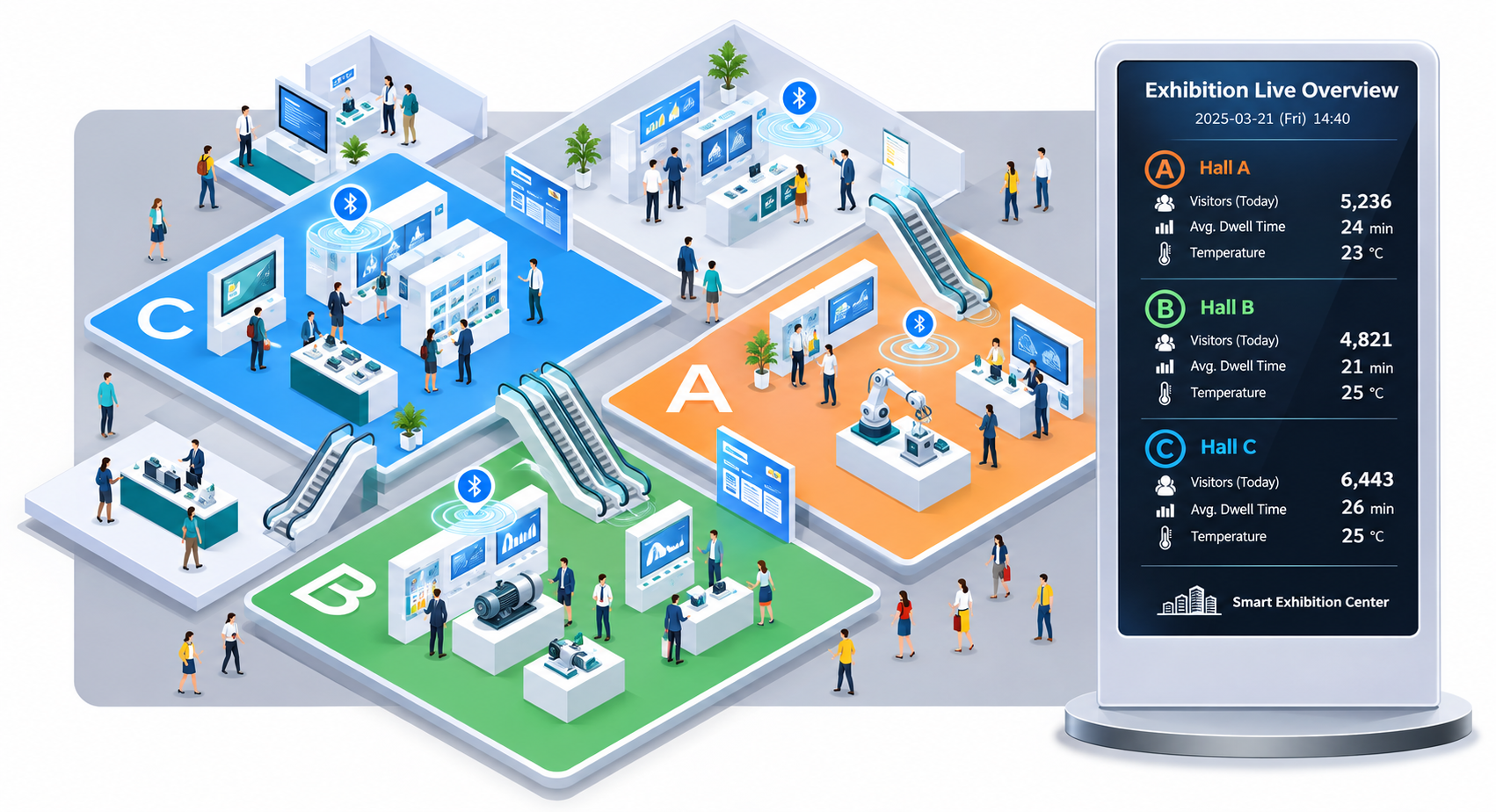
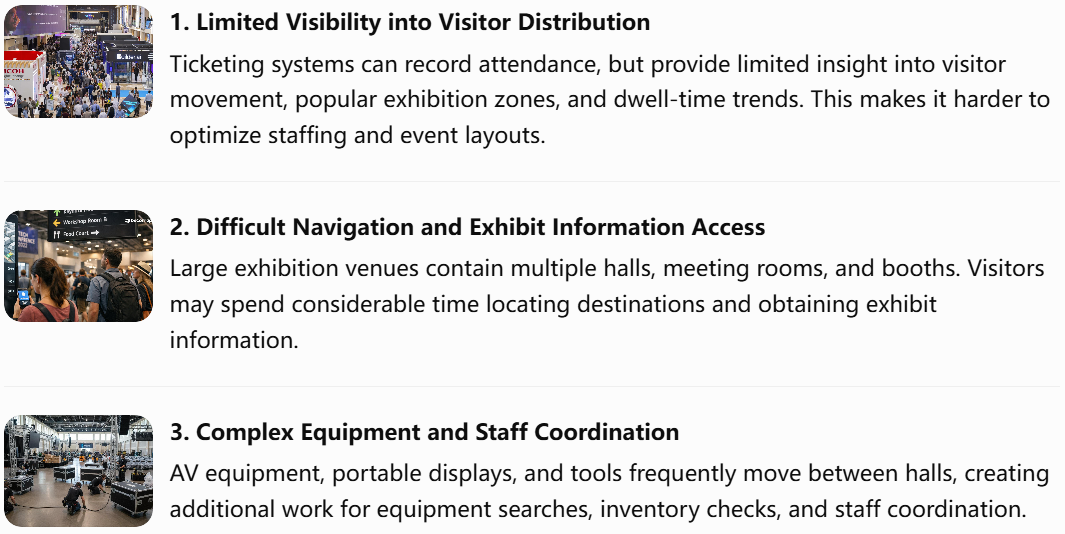
During large exhibitions, visitors are distributed across multiple halls, conference areas, and product display zones.
By integrating small BLE tags into event badges and deploying fixed gateways across the venue, the system can collect tag
detection records from different exhibition areas.
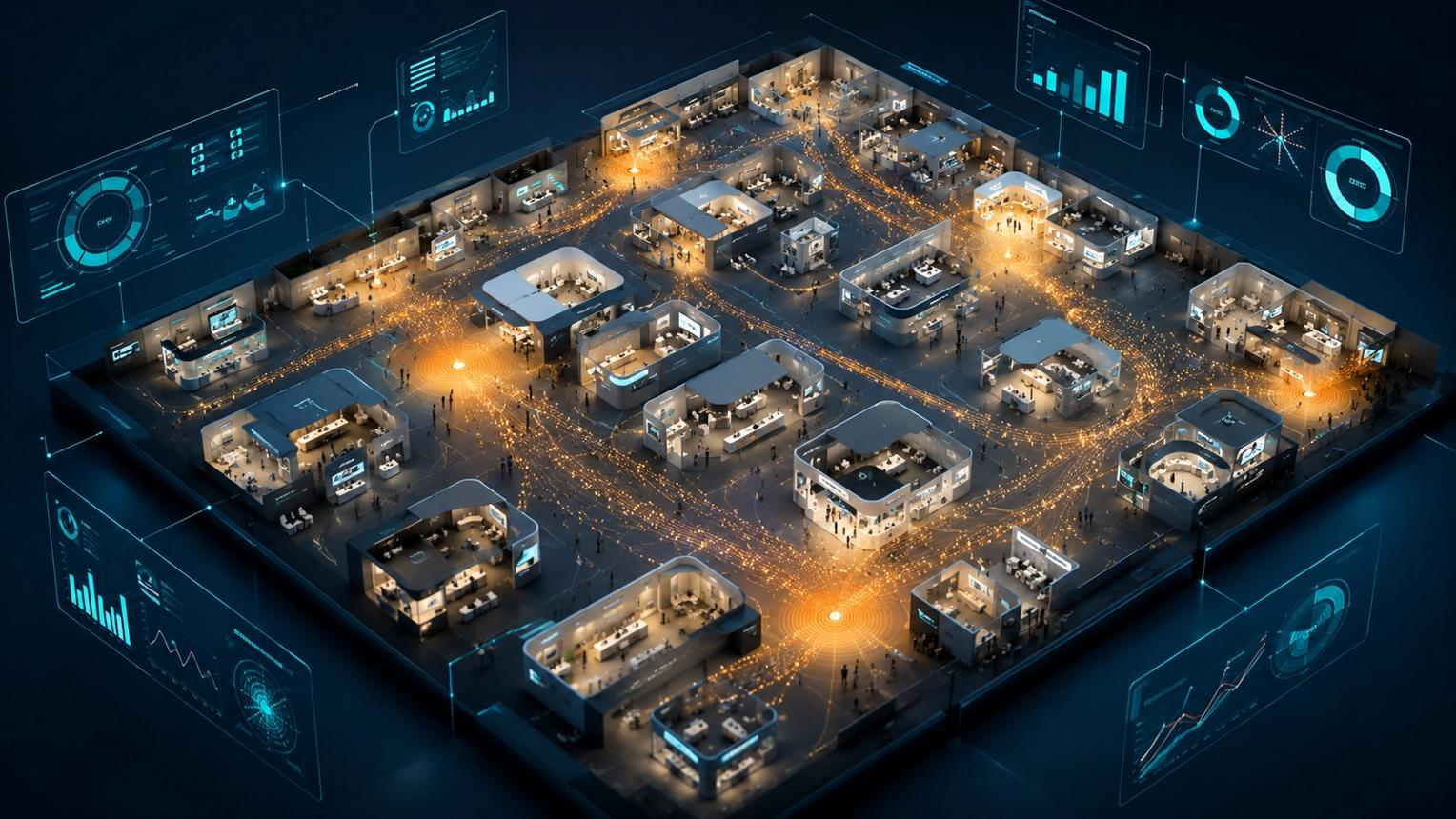
The management platform processes these records to generate zone-visit trends, dwell-time estimates, and exhibition heatmaps.
For example, when a particular hall experiences increased visitor activity in the afternoon, organizers can use the information to
adjust service staffing and improve layouts for future events.
Application Value: Move beyond basic entrance counts to better understand visitor distribution and exhibition-area engagement.
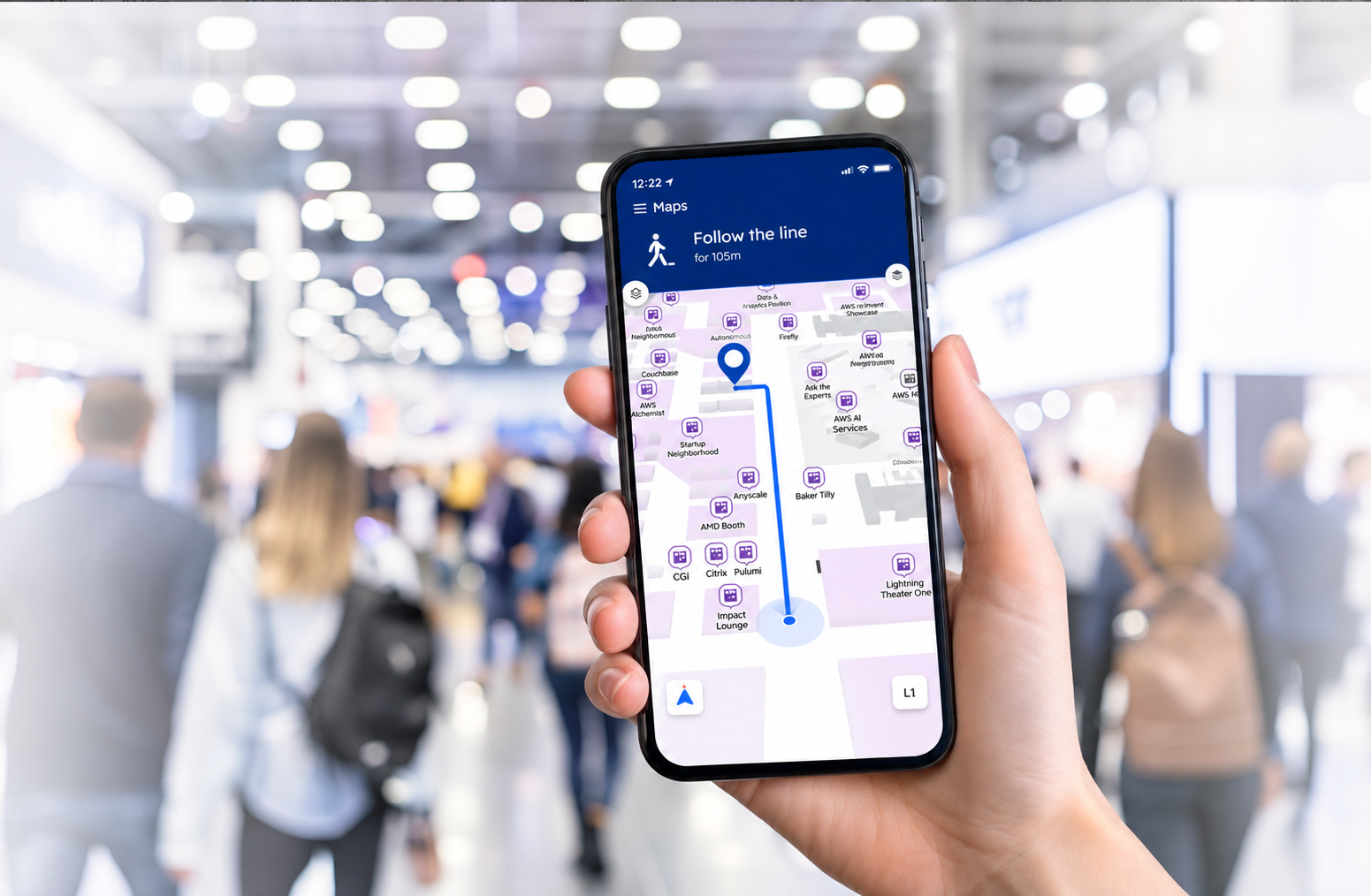
Large exhibition centers often include multiple halls, floors, meeting rooms, and public facilities.
Visitors unfamiliar with the venue may spend considerable time finding their destinations.
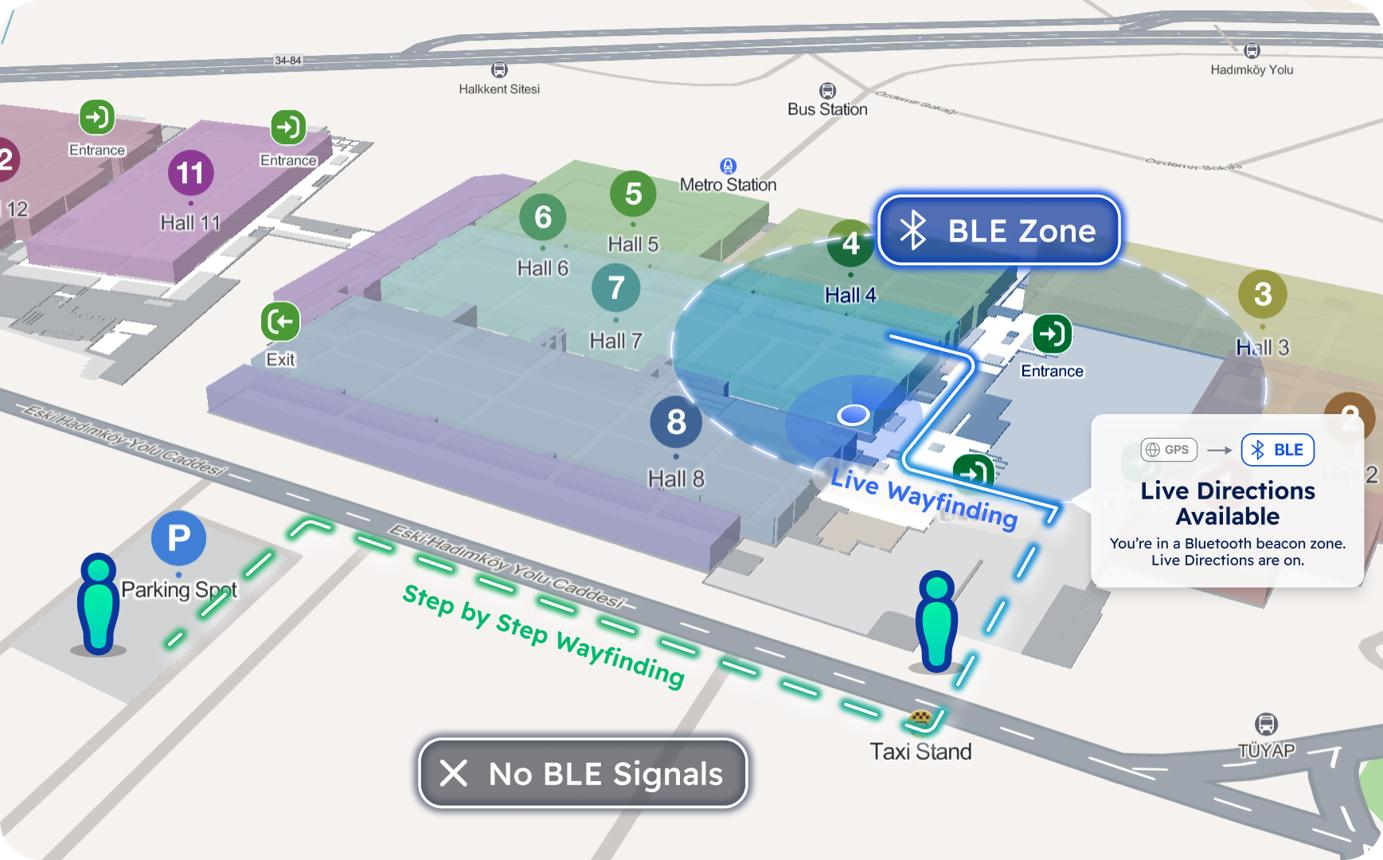
By deploying fixed BLE Beacons along main corridors and exhibition areas, a mobile App can combine Beacon signals
with indoor maps and positioning algorithms to provide location guidance.
Visitors can search for exhibition booths, conference rooms, restrooms, information desks, and other facilities directly through the App.
When exhibition layouts change, booth locations and map information can be updated without rebuilding the entire positioning infrastructure.
Application Value: Reduce navigation difficulties, lower the workload of information desks, and improve the overall visitor experience.
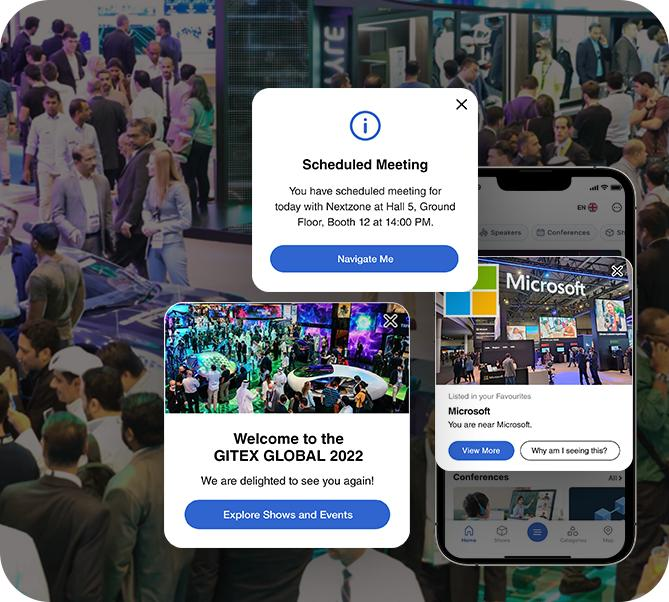
By installing BLE Beacons near exhibits or booths, visitors can use an event App to identify nearby displays and access
relevant information.
For example, at an industrial equipment exhibition in South Korea, visitors approaching a machine can view product
introductions, technical specifications, and demonstration materials on their smartphones without waiting for assistance.
The same digital experience can also support electronic document collection.
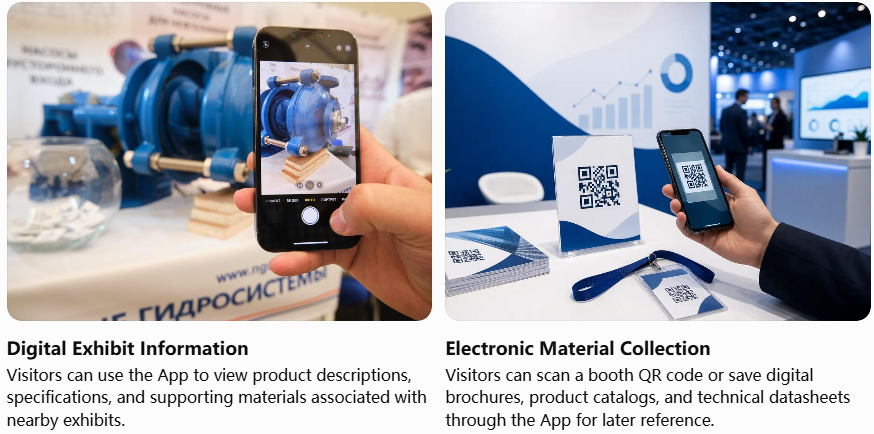
For future events, organizers can update exhibit content and Beacon associations while continuing to use the existing hardware.
Application Value: Make product information more accessible, simplify document collection, and reduce reliance on printed promotional materials.
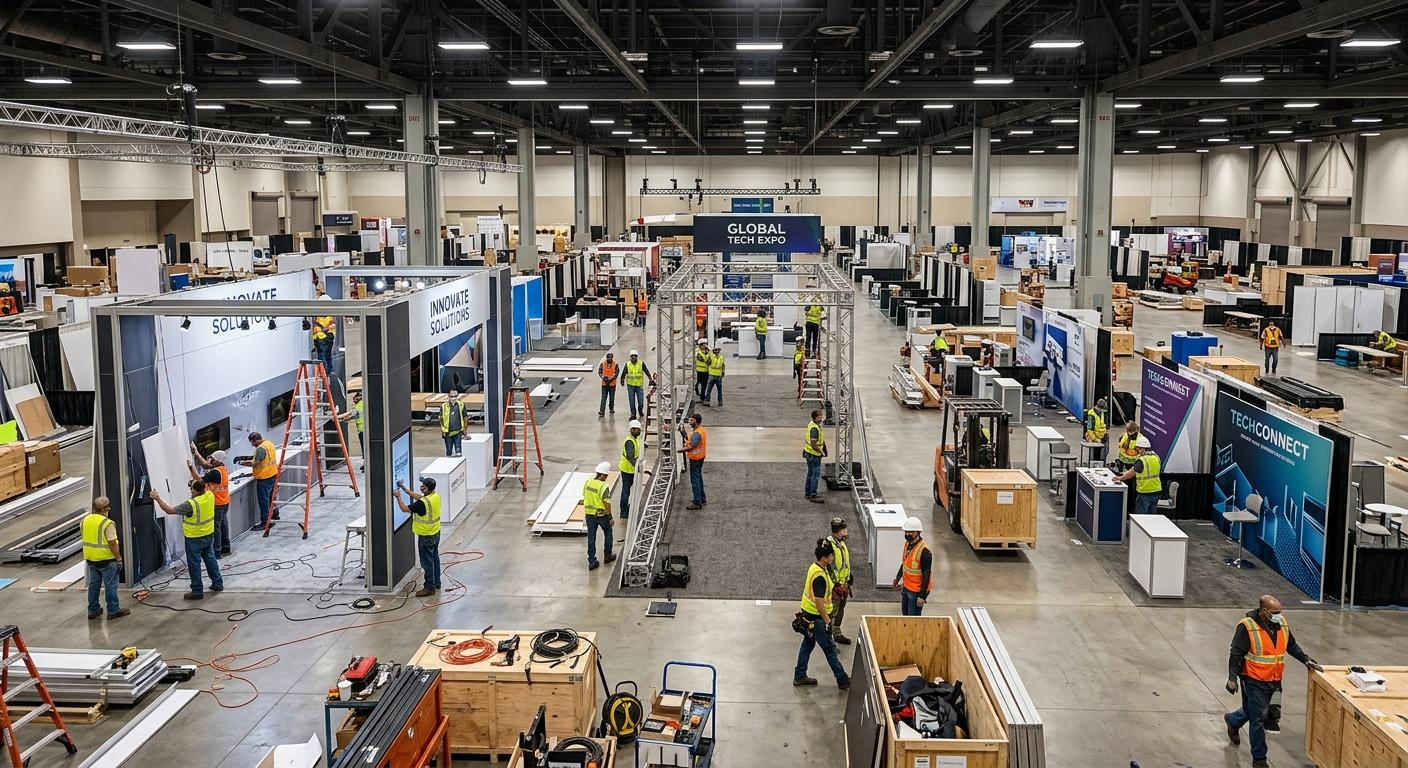
Exhibition venues manage many reusable assets, including display screens, audiovisual equipment, portable booths,
tools, and event infrastructure.
These assets frequently move between storage areas, exhibition halls, and backstage facilities.
By attaching BLE tags to equipment and deploying gateways in relevant areas, the system can record where assets were last detected.
For example, a display unit may be transferred from storage to Hall A and later moved to Hall B. Venue staff can check its last
detected zone through the management platform to support equipment searches and handovers.
Application Value: Improve asset visibility, reduce manual searching, and support more efficient equipment allocation and
inventory management.
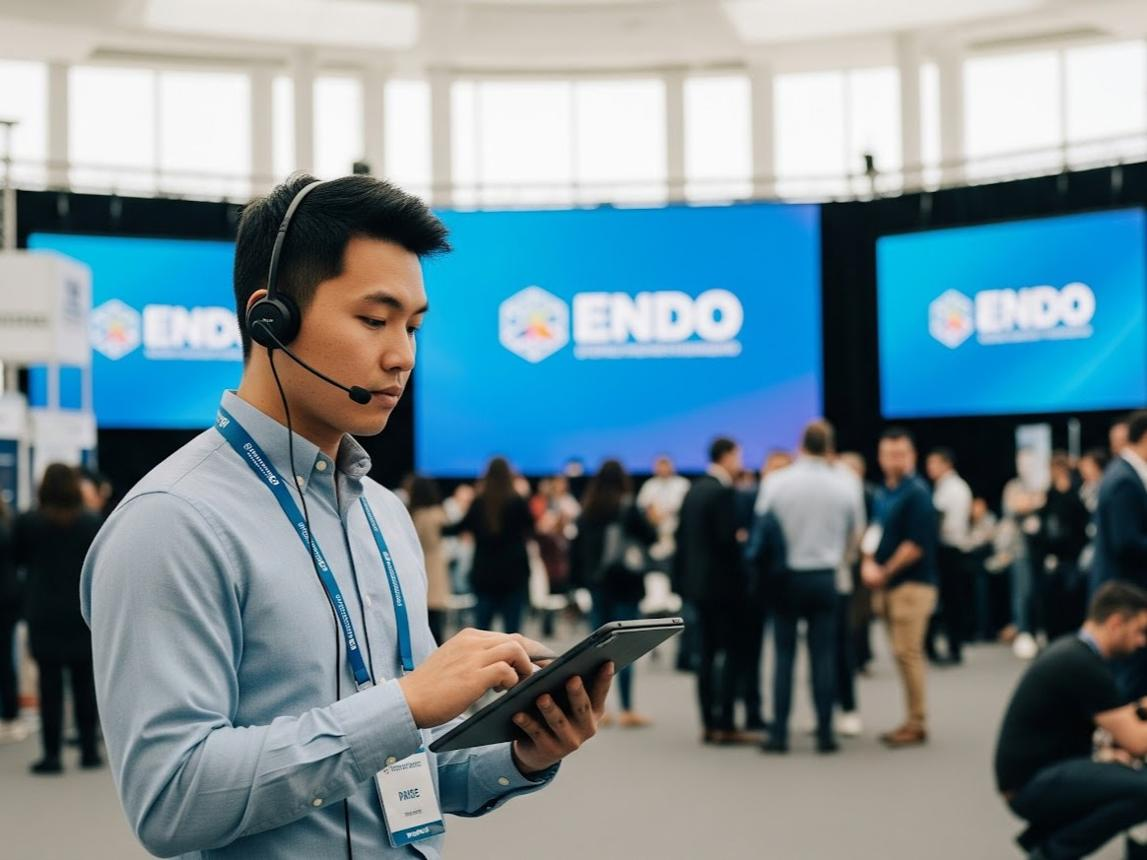
Large events require coordination among security personnel, cleaning teams, technical support staff, and visitor service teams.
With BLE-enabled staff badges and fixed gateways, the management platform can provide approximate zone-level visibility
of participating personnel.
When a hall requires technical assistance or operational support, managers can reference staff locations and task assignments
to coordinate an appropriate response.
Application Value: Improve coordination across exhibition areas and reduce time spent locating available staff.

Visitors often need timely information about product demonstrations, seminars, conference sessions,
and other event activities.
Fixed BLE Beacons can work with the exhibition App to associate digital content with specific venue areas.
For example, when visitors enter a technology exhibition zone, the App can display information about upcoming
demonstrations or related activities.
Event content can be updated for each exhibition while retaining the same Beacon infrastructure.
Application Value: Deliver more relevant event information based on the visitor's current exhibition area.
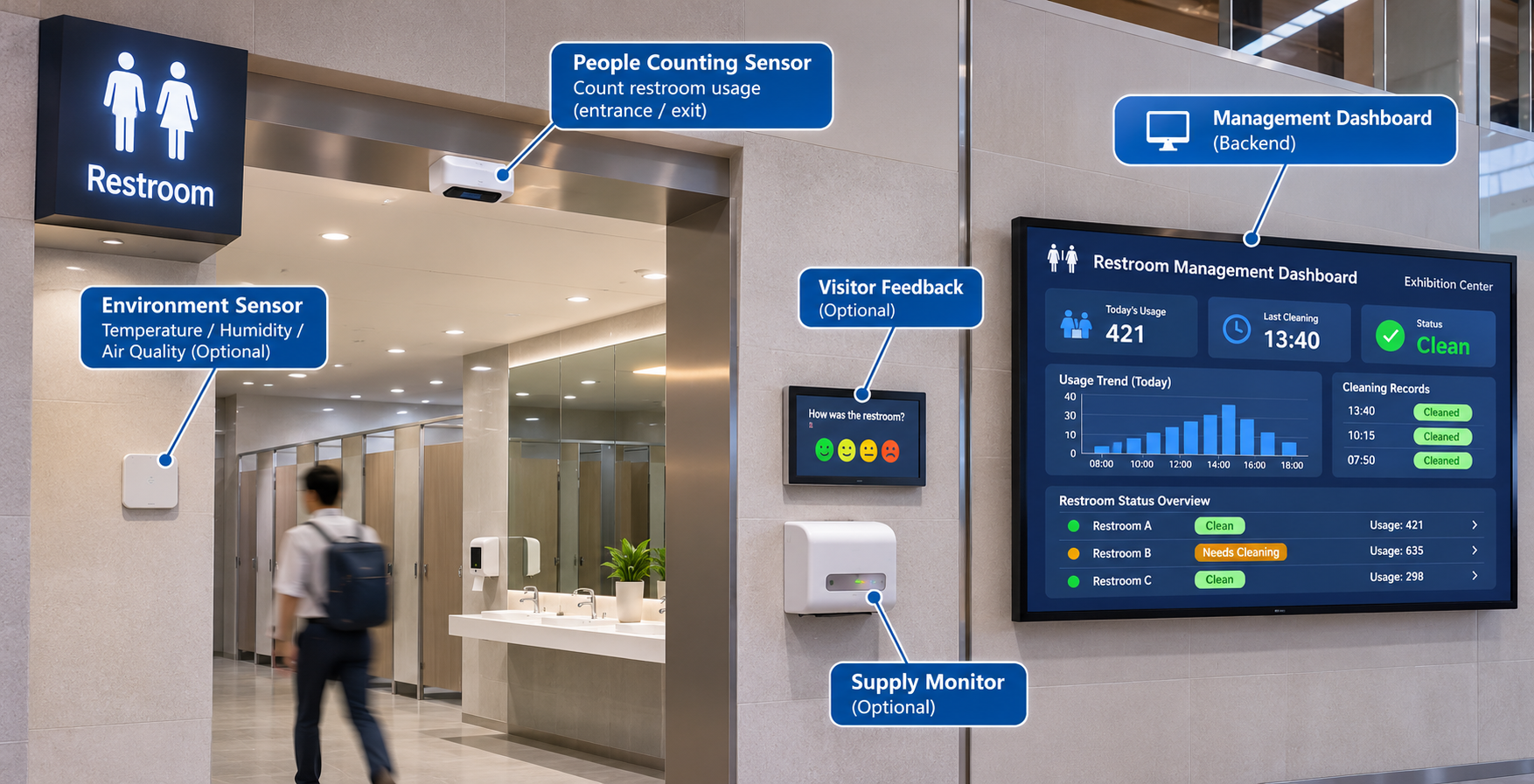
During busy exhibitions, restroom usage can vary significantly across different parts of the venue.
Traditional fixed cleaning schedules may not reflect actual demand, particularly during peak attendance periods.
By installing people-counting sensors at restroom entrances, the system can monitor visitor traffic and send the data
to the facility management platform.
When accumulated usage reaches a predefined condition, the system automatically notifies cleaning staff to inspect the restroom,
perform cleaning, and replenish necessary supplies.
After completing the task, staff can confirm completion through a mobile App or management terminal. The platform records a
timestamp and updates the restroom's cleaning status.
BLE staff badges can also support personnel identification as part of the task confirmation process.

Facility managers can review restroom usage, the latest cleaning timestamps, and maintenance records to
improve staffing decisions.
Application Value: Move from fixed cleaning schedules toward usage-based maintenance, reduce unnecessary inspections,
and improve facility cleanliness and service efficiency.
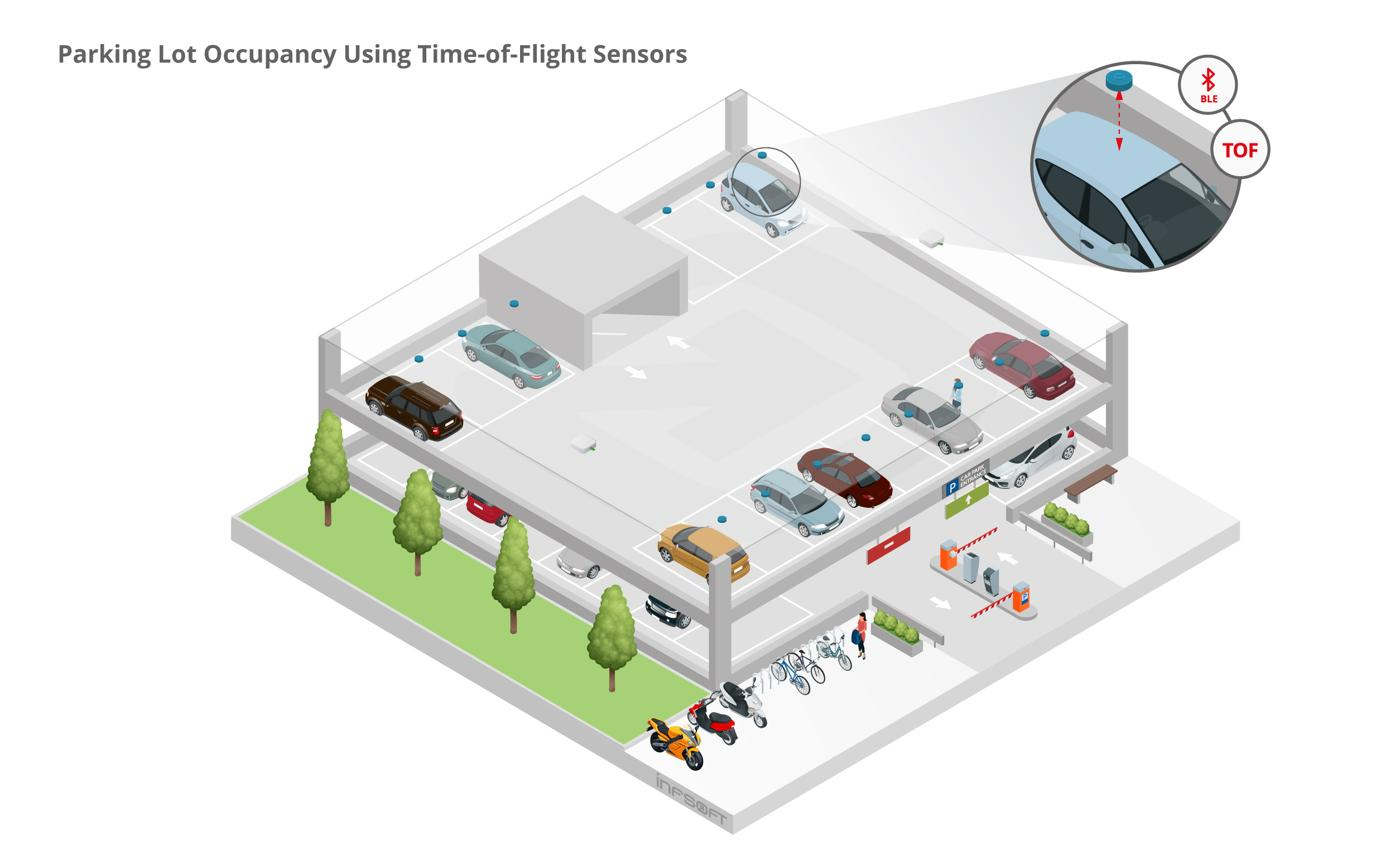
Large exhibitions attract significant numbers of visitors arriving by car, especially during opening hours and peak event periods.
Without parking availability information, drivers may spend additional time searching for vacant spaces.
By installing occupancy detection sensors in parking areas, the system can collect parking-space status and transmit it to
a management platform.
Visitors can view available parking information through electronic signage or the event App, while operators can use the
data to support vehicle guidance and parking management.
Application Value: Reduce time spent searching for parking spaces, improve parking resource utilization, and create a
smoother arrival experience.
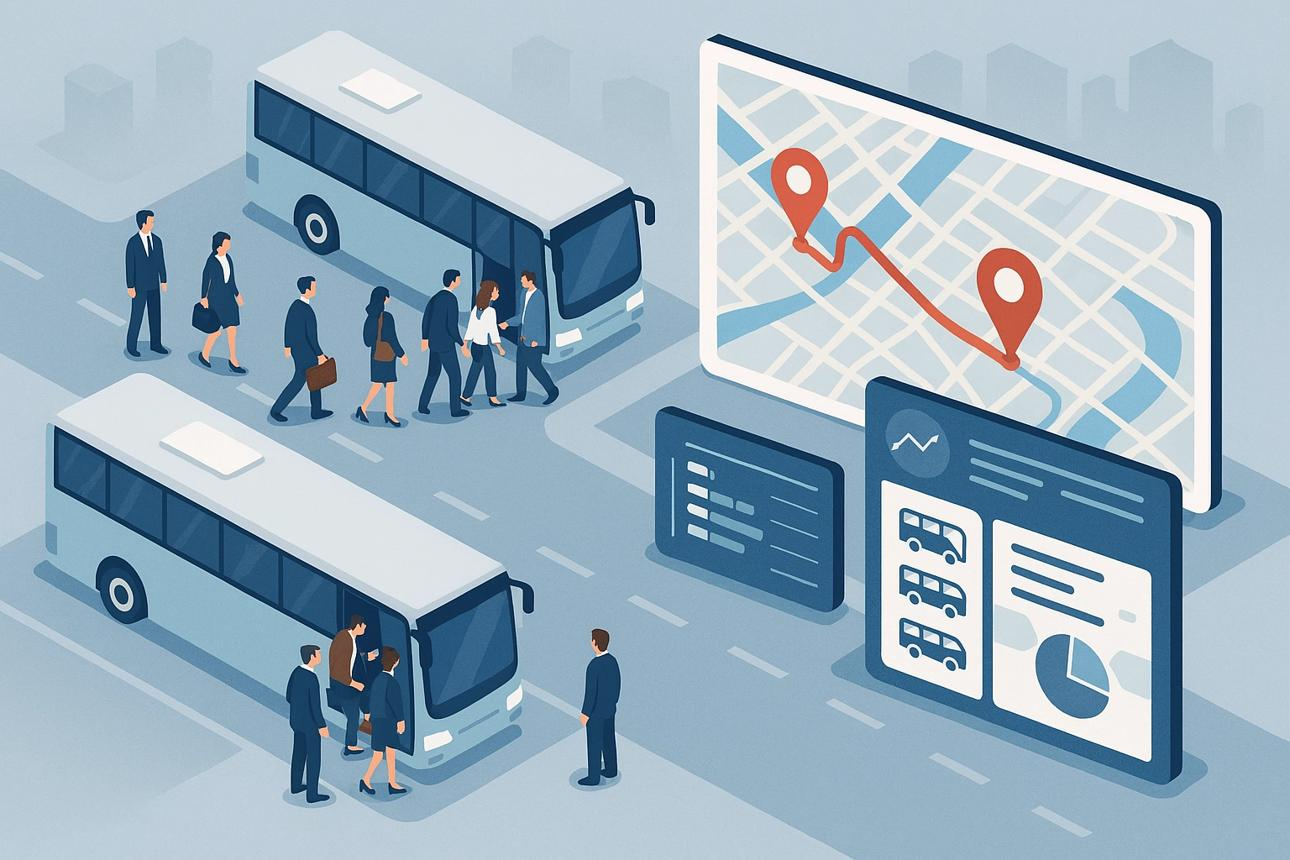
Some large exhibition venues provide shuttle services between parking facilities, transportation hubs, hotels,
and exhibition entrances.
During busy periods, visitors may have limited visibility into shuttle locations and expected waiting times.
By equipping shuttle buses with GPS tracking terminals and transmitting location data through suitable wireless networks,
operators can monitor vehicle movements through the management platform.
Combined with route and traffic information, the system can also provide vehicle locations and estimated arrival times
through a mobile App.
Application Value: Improve transportation visibility, support shuttle coordination, and provide visitors with more
convenient travel information.
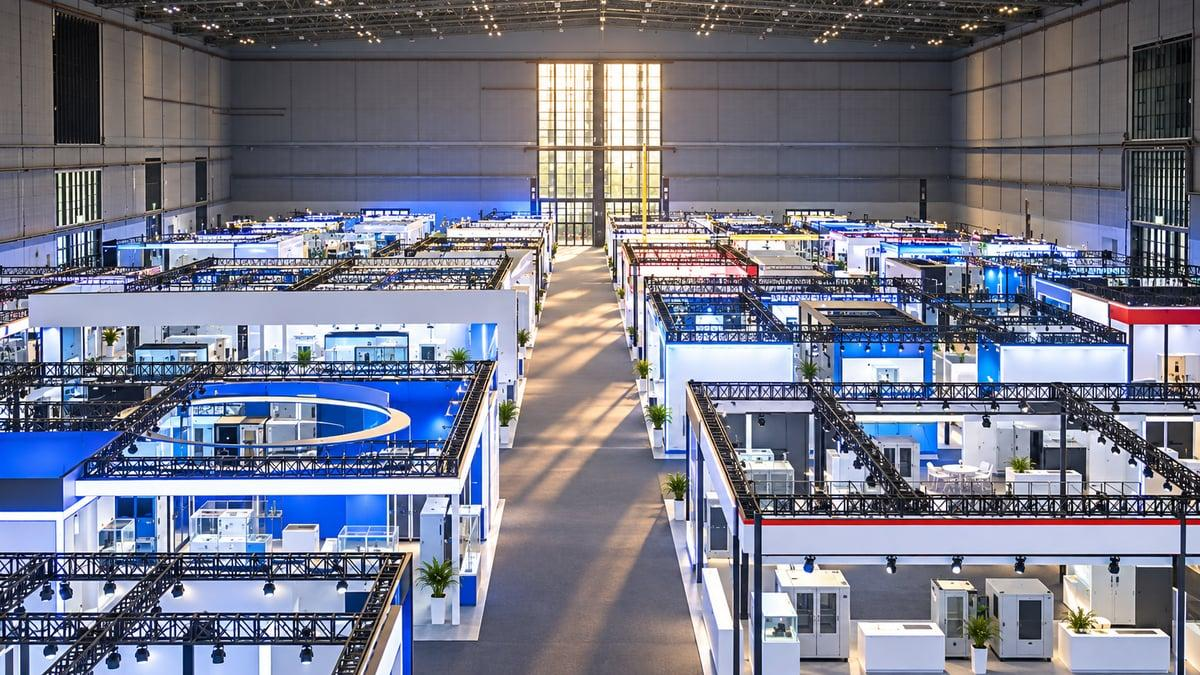
A major advantage of a multifunctional exhibition venue is that its infrastructure can be reused even when event
content and layouts change.
By deploying fixed gateways, selected navigation Beacons, wireless sensors, and standardized data interfaces,
the venue can activate different applications depending on the event.
For example, after an industrial trade show concludes, the venue can reuse much of the same wireless infrastructure for
an upcoming technology exhibition.
By updating booth layouts, exhibit content, event information, and device configurations, the system can adapt to
new requirements.
Significant layout changes may still require repositioning certain devices and verifying wireless coverage.
The goal is not to build a separate IoT system for every exhibition, but to establish reusable infrastructure that supports
continuous event operations.
Phase 1: Core Function Validation
Select a limited exhibition area to test wireless coverage, zone detection, digital exhibit information, asset tracking, and data transmission.
Phase 2: Visitor Services & Operations Integration
Integrate indoor navigation, exhibit information, electronic document access, visitor analytics, and staff management with
the relevant software systems.
Phase 3: Facility & Transportation Expansion
Extend the solution to restroom traffic monitoring, cleaning alerts, parking management, and shuttle tracking according
to venue requirements.
Phase 4: Multi-Event Reusability Validation
Test the system across changing booth layouts, exhibit content, and event configurations to verify long-term flexibility
and operational reliability.
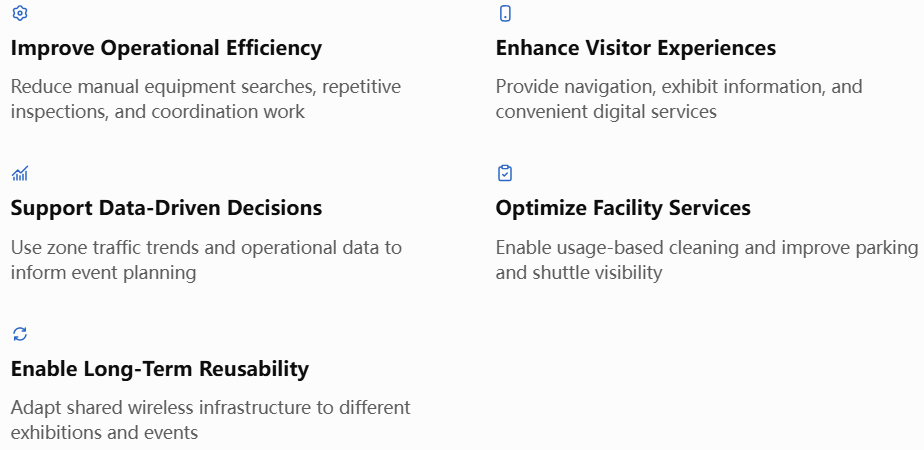
The value of a smart exhibition center goes beyond any single tracking or monitoring function. It lies in connecting venue operations,
visitor services, equipment management, and facility maintenance through an integrated digital infrastructure.
From visitor analytics, indoor navigation, and exhibit information to asset tracking, staff coordination, restroom maintenance,
parking management, and shuttle services, multiple IoT technologies can work together to support comprehensive exhibition operations.
For multifunctional exhibition venues in South Korea, a flexible and reusable IoT architecture provides a foundation that can evolve
with changing event requirements.
Conkmile continues to explore practical BLE and wireless sensing applications for smart exhibition environments, supporting flexible,
integrable, and scalable IoT solutions for exhibition and event management.


